Pest Control Service Dallas delivers high-impact, industrial-grade extermination and continuous perimeter fortification against invasive wood-destroying insects, structural rodents, and health-compromising vectors. Technicians locate subterranean colonies and deep wall voids to eliminate target species at the biological source.
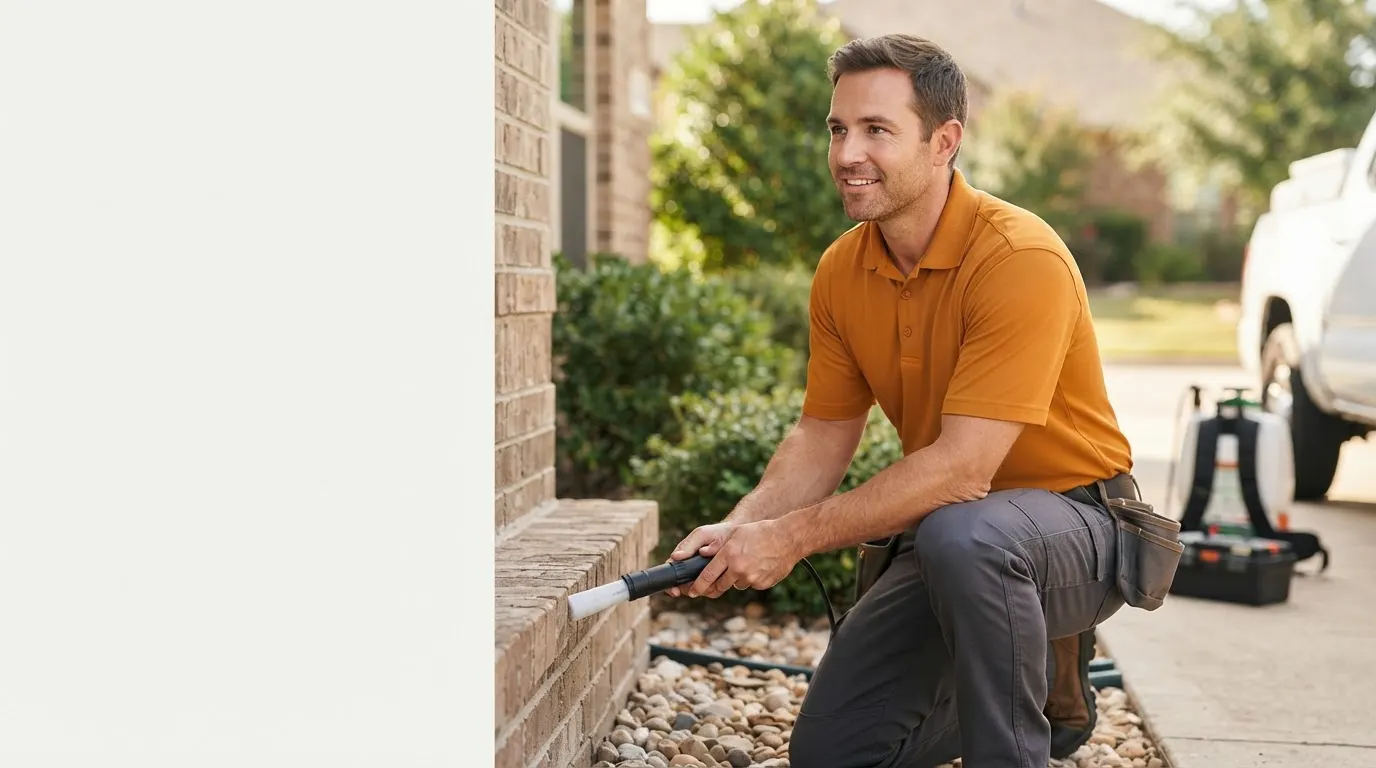
Pest Control Service company in Dallas is a specialized structural defense operation that inspects properties, eliminates active insect and rodent colonies, and installs permanent mechanical barriers to protect residential and commercial structures throughout Dallas County.
Every service reflects the same meticulous attention to detail, whether it's a single job or a larger pest control service project across Dallas.
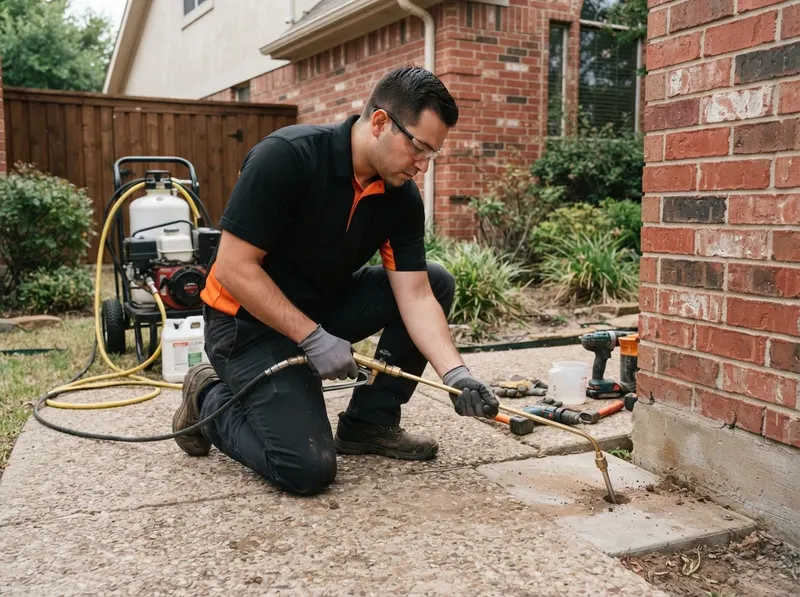
Subterranean termite treatments establish an unbroken non-repellent chemical barrier through continuous soil trenching and foundation drilling. Technicians apply liquid termiticide at four gallons per ten linear feet along structural foundations to eliminate foraging workers and collapse subterranean colonies. In residential properties with monolithic concrete slabs, technicians utilize calibrated rotary hammer drills to penetrate expansion joints and concrete patios at twelve-inch intervals, ensuring that liquid termiticide saturates the soil beneath load-bearing masonry walls. For pier-and-beam foundations, crews trench both sides of interior support piers and perimeter curtain walls, delivering uniform chemical coverage down to the top of structural footings to eradicate subterranean mud tubes. Specialized non-repellent termiticides leverage biological transfer mechanics, causing exposed termites to spread lethal doses to reproductive queens and subterranean nestmates before colonies can cause structural timber failure.
Get a quote →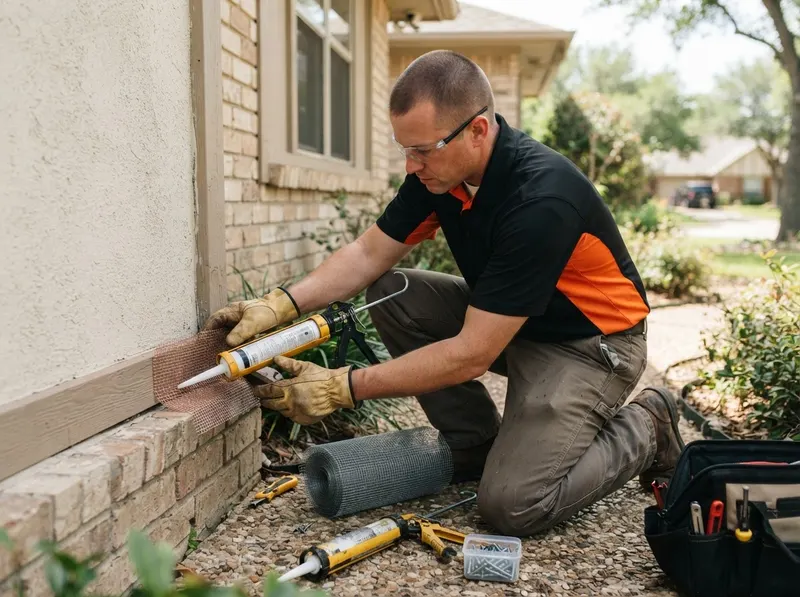
Rodent exclusion identifies architectural entry points along rooflines, soffits, and weep screeds. Technicians mechanically seal openings larger than one-quarter inch using heavy-duty 16-gauge steel mesh, structural metal flashing, and elastomeric sealants to permanently deny attic access to roof rats and mice. The service initiates with a comprehensive diagnostic inspection of roof intersections, dormer corners, gable vents, air conditioning chase lines, and crawl space access doors where rodents exploit thermal signatures to enter building envelopes. Once entry points are physically secured using rust-resistant hardware cloth secured with industrial fasteners, technicians establish tamper-resistant interior snap traps to rapidly extract trapped populations without utilizing poison baits that risk carcass decay within sealed drywall cavities. Follow-up visits confirm zero interior activity, sanitize attic insulation tainted by biological pheromone markers, and verify exterior structural integrity across all installed barrier materials.
Get a quote →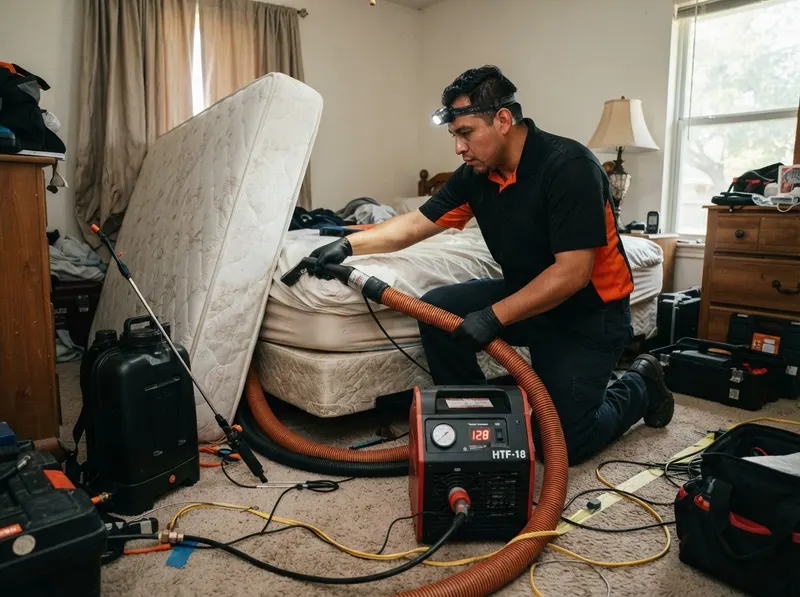
Bed bug remediation targets hidden harborages within mattress seams, baseboards, electrical outlets, and furniture framing. Treatments utilize targeted non-repellent liquid formulations paired with insect growth regulators and desiccant dusts to dehydrate nymphs and adults without requiring extensive textile disposal. For severe or widespread infestations across residential complexes and hospitality environments, mobile forced-air thermal heating units raise interior ambient temperatures between 120 and 135 degrees Fahrenheit, penetrating deep into structural wall cavities, upholstery fibers, and wood flooring to denature insect proteins and eliminate heat-sensitive eggs in a single comprehensive treatment cycle. Chemical protocols utilize residual formulations containing microencapsulated synthetic pyrethroids combined with juvenile hormone mimics that arrest molting cycles and sterilize surviving adult populations. Every targeted bed bug remediation protocol concludes with detailed post-treatment mattress encasements, residual dust applications inside wall void electrical boxes, and non-toxic monitoring traps installed beneath bed posts to verify total biological eradication.
Get a quote →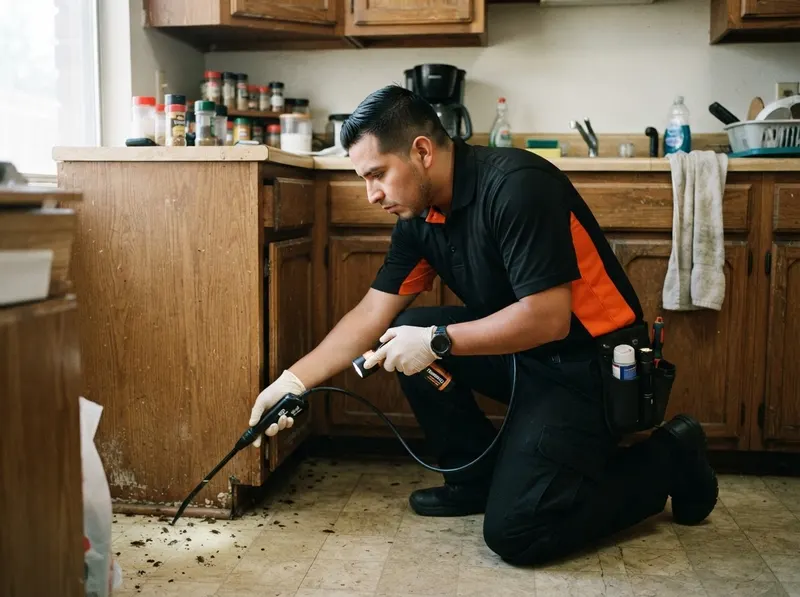
German cockroach cleanout services eradicate heavy infestations inside kitchen cabinetry, motor housings, and plumbing penetrations. The service deploys precision gel baits, insect growth regulators, and residual vacuum extraction to dismantle the reproductive cycle within commercial and residential structures. High-infestation zones require high-efficiency particulate air (HEPA) vacuum extraction to physically remove hundreds of active nymphs, adult roaches, and egg cases (oothecae) from concealed motor compartments behind refrigerators, dishwashers, and commercial food preparation equipment. Technicians then apply targeted matrix baits formulated with advanced active ingredients such as indoxacarb or dinotefuran in micro-dots across hidden cabinet hinges, electrical junction boxes, and pipe collars where roaches aggregate. Simultaneously, aerosolized insect growth regulators prevent immature nymphs from completing developmental molts into reproductive adults, collapsing colony populations within fourteen to twenty-one days without requiring kitchen inventory evacuation or persistent chemical odors.
Get a quote →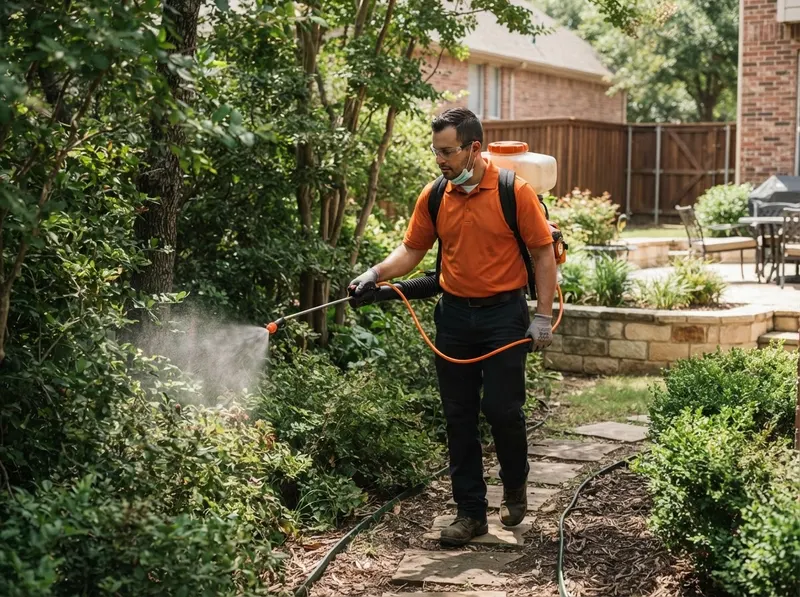
Mosquito reduction programs disrupt adult resting zones and larval breeding habitats on residential grounds. Crews use backpack misting equipment to apply microencapsulated adulticides beneath shaded leaf canopies and distribute bacterial larvicides into standing water pools from April through October. Service technicians conduct systematic property audits to locate cryptic standing water sources, including French drains, clogged gutter basins, bird baths, and low-lying landscape turf where Culex and Aedes mosquito species lay eggs. Solid slow-release briquettes containing Bacillus thuringiensis israelensis (BTI) are placed into non-drainable reservoirs to biologically target mosquito larvae without harming beneficial aquatic life, pets, or wildlife. Foliar misting operations target the undersides of broadleaf shrubbery, ivy groundcovers, and perimeter fence lines up to a height of ten feet, creating an active contact kill zone that eliminates adult mosquitoes as they rest during hot daytime hours, significantly lowering the risk of West Nile virus transmission.
Get a quote →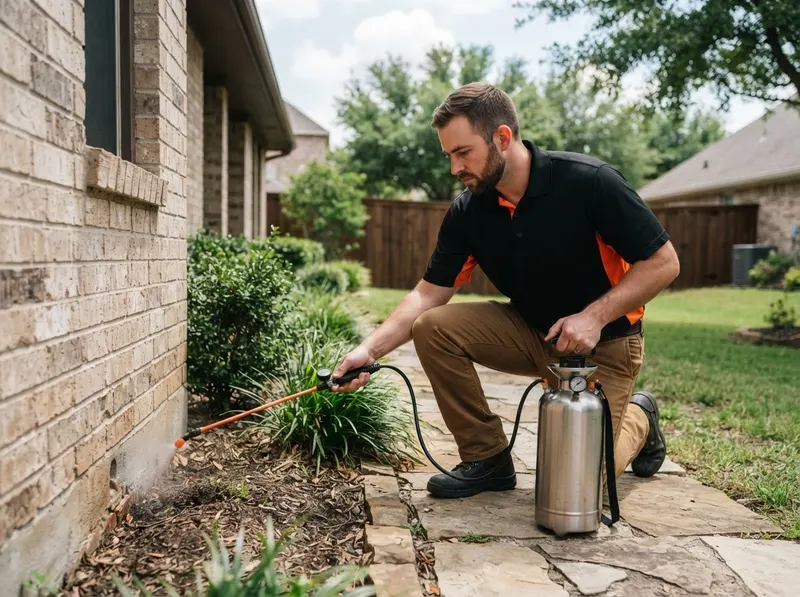
Perimeter pest defense creates a protective barrier around the structure's exterior base. Technicians treat three feet up the foundation wall and six feet out across adjacent turf and landscape beds to repel American cockroaches, crickets, earwigs, and fire ants before they enter living quarters. The treatment integrates microencapsulated liquid insecticides formulated to withstand high ambient ultraviolet exposure and heavy rainfall without premature chemical degradation. Crews clear foundation weep holes of accumulated soil and organic debris, applying targeted water-resistant insecticidal dust into brick weep vents using precision bulb dusters to stop crawling pests from nesting inside structural exterior wall voids. In addition to ground-level chemical fortification, technicians sweep exterior eaves, window overhangs, and soffit corners with telescoping extension poles to physically remove spider webs and stinging wasp nests, reinforcing a sanitary outer envelope around the entire building footprint.
Get a quote →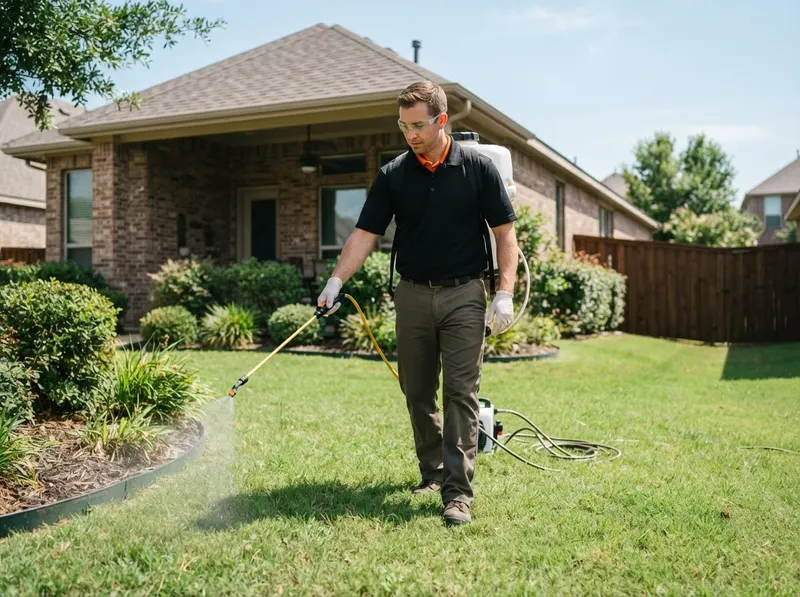
Flea and tick yard treatments eliminate blood-feeding parasites from residential turf, dog runs, and low-hanging landscape cover. Applications saturate shaded outdoor resting zones with contact insecticides and residual growth regulators to prevent pet re-infestation and household transport. High-volume power sprayers deliver diluted liquid formulations deeply into dense turf root systems, mulch beds, and tall grassy borders where flea larvae and nymphal ticks seek shelter from direct sunlight and desiccation. Treatments incorporate pyriproxyfen, an advanced insect growth regulator that binds to organic matter in soil, interrupting the life cycle of flea pupae and preventing tick larvae from successfully feeding and maturing into disease-transmitting adults. Property owners receive specific post-treatment guidance regarding landscape watering intervals and mowing schedules to preserve residual barrier strength, ensuring yards remain protected against deer ticks, brown dog ticks, and cat fleas throughout peak spring and summer activity cycles.
Get a quote →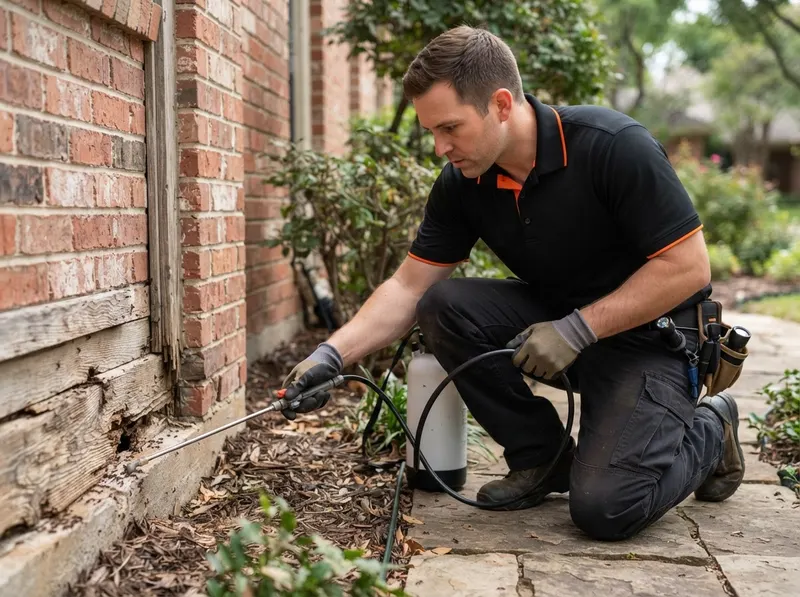
Carpenter ant eradication targets wood-destroying satellite colonies nesting inside damp wall framing, deck posts, and window sills. Technicians inject targeted non-repellent dusts into compromised lumber voids and establish exterior perimeter boundaries to sever foraging lines to parent nests. Because carpenter ants excavate structural framing without consuming wood cellulose, visual confirmation of fine wood shavings (frass) helps crews locate hidden galleries inside moisture-compromised window casings, plumbing pipe wall chases, and roof eaves. Field technicians trace active nocturnal foraging trails connecting indoor satellite galleries to primary parent colonies located in nearby tree stumps, landscape timbers, or firewood stacks. Non-repellent liquid barriers and specialized carbohydrate and protein baits allow foraging worker ants to carry lethal active ingredients directly back into central brood chambers, ensuring complete colony mortality across both primary and satellite nesting sites.
Get a quote →You get a firm, itemized quote for your pest control service before any work begins, no surprises, no pressure.
Careful prep, tidy work, and a full cleanup when we are done. We treat your home and belongings like our own.
The same trusted, background-checked team from the first call to the final check.
Selecting the correct structural treatment depends directly on the biological target, the building envelope, and the property's construction foundation. For subterranean termite activity along a concrete slab or pier-and-beam foundation, continuous liquid soil barriers establish an unbroken lethal zone, whereas localized spot treatments leave unfortified entry gaps. If eliminating German cockroach or bed bug infestations inside finished living quarters, targeted non-repellent residual applications combined with insect growth regulators clear deep harborages; running continuous synthetic pyrethroid perimeter sprays alone merely scatters colonies into adjacent interior drywall voids.
For persistent rodent problems, mechanical exclusion combined with secure exterior bait containment halts attic entry, whereas placing indoor rodenticide without closing architectural entry points results in deceased animals inside concealed wall insulation. The trade-off is mechanical labor and structural sealing investment versus the temporary suppression of recurring DIY applications. When deciding between structural heat remediation and multi-stage chemical application for bed bug eradication, heat treatments elevate internal wall temperatures to 122 degrees Fahrenheit for instant single-day mortal exposure across all life cycles, whereas multi-stage chemical treatments require two to three visits spaced fourteen days apart to eliminate newly hatched nymphs.
Homeowners who select heat treatments encounter higher initial project costs but avoid repeated room preparation routines, furniture dismantling, and weeks of diagnostic monitoring. For general pest maintenance across perimeter turf and masonry, selecting seasonal quarterly barrier treatments establishes unbroken protective zones that intercept seasonal migrations of smokybrown roaches and paper wasps before exterior populations breach attic soffits, while reactive one-time applications only knock down visible surface insects without addressing deep underground nesting sites or seasonal reproductive surges. Commercial establishments such as restaurants and distribution warehouses require dedicated integrated pest management protocols operating under strict regulatory reporting guidelines, which trade simple chemical applications for ongoing mechanical monitoring, floor drain bioremediation, and exterior dock leveler seal fortification.
Homeowners managing historic pier-and-beam properties in older neighborhoods face distinct trade-offs between crawl space encapsulation and localized perimeter baiting; crawl space encapsulation seals out rising soil moisture and completely bars access to wood-boring beetles and subterranean termites, but demands significant initial capital expenditure compared to annual liquid perimeter applications. Balancing structural investment against pest pressure ensures that residential foundations and commercial assets maintain architectural integrity without recurring chemical dependence.
Every project gets a firm, written price after a free on-site visit. Ranges below for orientation.
Tell us about your pest control service job and we'll send a clear, written quote, usually the same day. Or just call and talk to a real Dallas pro.
(945) 410-2480
Dallas soils consist of heavy, shrink-swell Houston Black clay that shifts dramatically between wet spring months and intense triple-digit summer droughts. This cyclical ground movement cracks concrete slabs and pulls exterior brick away from expansion joints in neighborhoods like Preston Hollow, Lakewood, and Oak Cliff, creating direct entry conduits for subterranean termites and roof rats. High summer humidity near White Rock Lake, the Dallas Arboretum, and the Trinity River corridor sustains dense mosquito and roach populations that rapidly penetrate unsealed soffits and foundation weep holes across Dallas County. In historic districts like the Bishop Arts District and Kessler Park, older pier-and-beam foundations feature extensive crawl spaces exposed to damp ground conditions, fostering wood-destroying subterranean termites and powderpost beetles that compromise structural subflooring. Rapid commercial and residential redevelopment across Uptown, Far North Dallas, and Lake Highlands disturbs vast underground rodent burrows, forcing displaced roof rats along electrical utility lines and mature tree canopies directly into residential attic spaces through unfortified roof vents and masonry junctions. Severe summer heat waves exceeding one hundred degrees Fahrenheit drive American cockroaches and Argentine ants out of parched turf beds and desiccated municipal storm sewers directly toward interior residential plumbing chases, slab cracks, and air conditioning condensation drains. The Dallas County climate sustains insect reproduction from early March through late November, demanding robust mechanical barriers, resilient chemical bonds, and deep foundation treatments capable of withstanding shifting clay soil profiles without rupturing protective chemical envelopes.
Free estimates for Dallas & the surrounding area.
 Iron Bison Pest Control